
The Difference Between "Trauma-Informed" & Trauma Therapy

Before we dive in… I want to introduce Stillpoint Therapy Collective.
I’m proud to share that my group practice now has a name: Stillpoint Therapy Collective. We’re a team of curious, relational, and liberation-oriented therapists who support clients through relationship challenges, trauma healing, identity exploration, somatic work, and so much more. Stillpoint is a space where both clients and therapists can land, root, and grow.
We’re currently welcoming new clients, and would love for you to help us spread the word. You can learn more or make a referral here.
“Trauma-informed” has become a buzzword in recent years. It illustrates a growing awareness that trauma is widespread and that the ways we show up for each other professionally, relationally, and systemically need to reflect that. But I’ve noticed that the term is often used interchangeably with “trauma therapy,” and while they’re related, they are not the same thing.
Knowing the difference matters. Whether you’re someone seeking support or a provider trying to offer it, understanding these terms helps ensure people get the appropriate care and support.
What Does “Trauma-Informed” Actually Mean?
Being trauma-informed is a framework, a way of understanding and interacting with others that acknowledges the pervasive impact of trauma. It’s about creating environments where people feel safer, more empowered, and less likely to be retraumatized.
A trauma-informed approach is built on principles like:
Safety (emotional, physical, and relational)
Trustworthiness & Transparency
Collaboration & Mutuality
Empowerment & Choice
Cultural Humility & Responsiveness
Anyone can be trauma-informed - therapists, medical providers, teachers, chiropractors, yoga instructors, and even entire organizations or companies. But being trauma-informed doesn’t mean someone is doing trauma treatment. It means they’re aware of trauma and strive to be mindful and respectful of its impacts.
So, What Is Trauma Therapy?
Trauma therapy goes beyond awareness and sensitivity. It’s a specialized form of therapy, offered by those who are trained to support people in processing and healing from trauma. This work often includes helping clients:
Access and release “stuck” survival responses
Integrate fragmented or overwhelming experiences
Rebuild a sense of safety and agency in the body and mind
There are many different approaches to trauma therapy, such as Sensorimotor Psychotherapy, EMDR, somatic therapy, Internal Family Systems (IFS), Somatic Experiencing, Brainspotting, and more. These aren’t quick-fix methods. They are generally gentle, attuned, and have the potential to be deeply reparative. They also require intensive clinical training.
Key Differences at a Glance
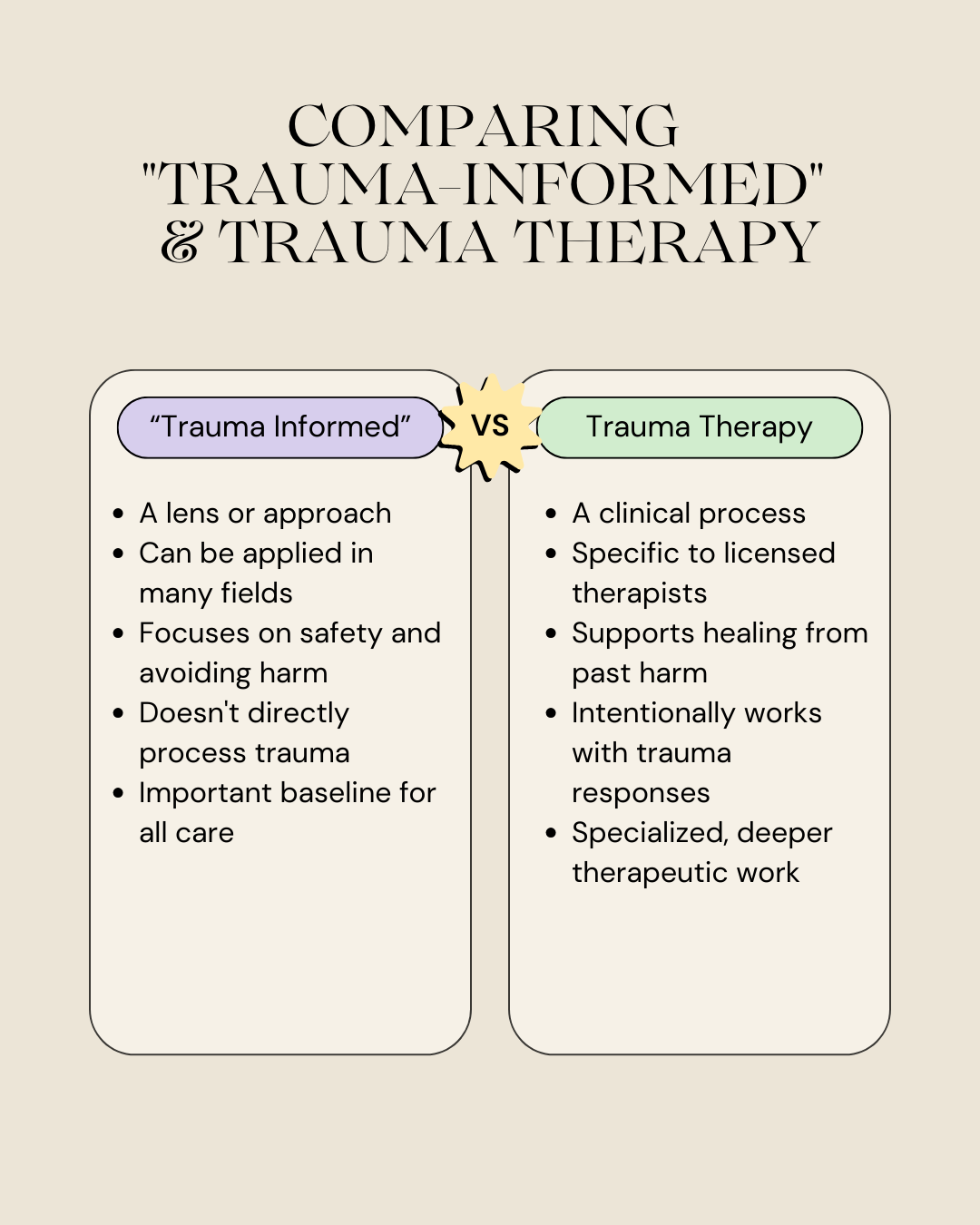
Why the Distinction Matters
When the lines between these terms get blurry, people seeking support may end up in the wrong place or with the wrong expectations. A yoga teacher might say their class is “trauma-informed,” but that doesn’t mean it’s a substitute for therapy. A therapist might market themselves as “trauma-informed” without having the training to offer actual trauma work.
None of this is about gatekeeping. It’s about clarity, consent, and care. Being trauma-informed is a crucial foundation. But trauma therapy is a deeper process that asks for training, experience, supervision, and a lot of humility.
What Do You Need?
If you're exploring support, it might help to ask:
Am I looking for a space where I’ll feel safe and seen?
Or am I ready to actively work through past trauma and its impacts?
Both are valid. Sometimes we need a soft landing. Sometimes we need a deeper dive. Often, we need both at different points in the journey.
Final Thoughts
Being trauma-informed is the baseline. Trauma therapy is the deeper work. And when we’re clear about the difference, we can build more ethical and effective pathways to healing.
If you're curious about how trauma therapy might support you or want help figuring out what kind of care you need, you're always welcome to reach out here.
Journal Prompts: Reflecting on Your Healing Needs
Exclusive for paid subscribers.
